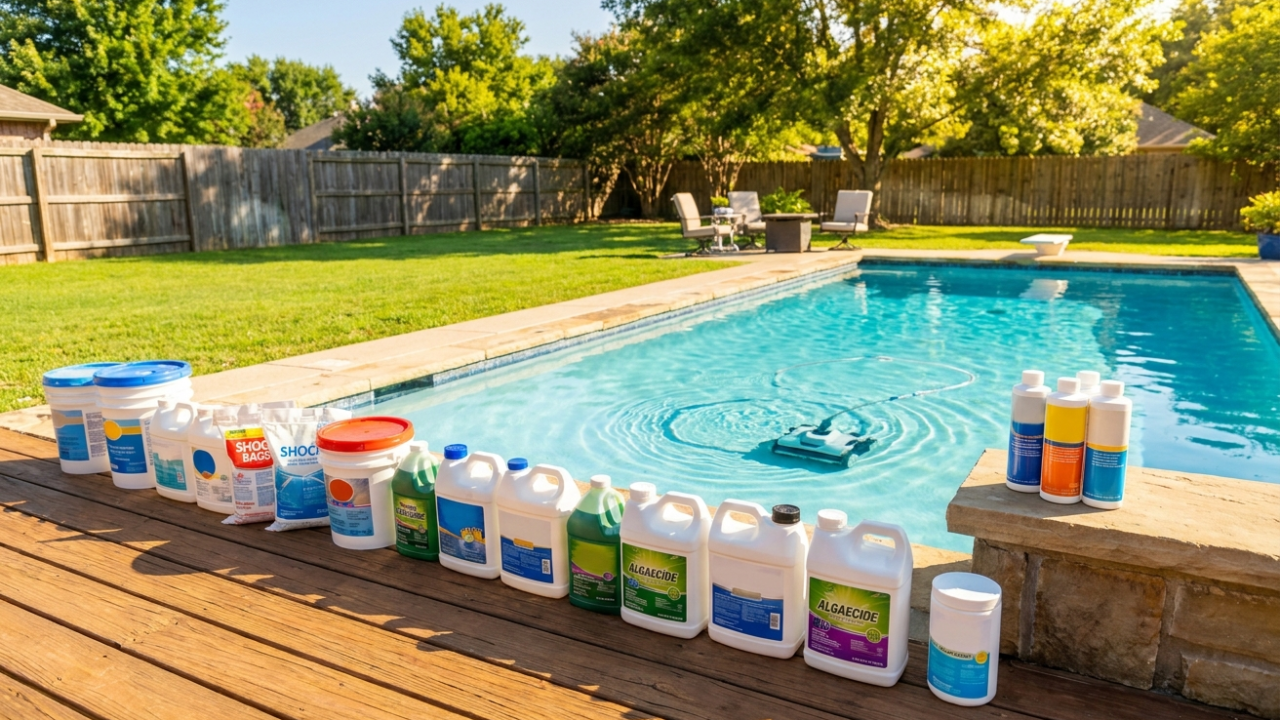
Pool owners typically think of cleaning and chemical maintenance as separate categories. One removes physical debris. The other manages water chemistry. In reality, they are deeply connected, and the connection runs in both directions. Physical debris that sits in the pool consumes chemicals. Removing debris promptly reduces chemical consumption.
This relationship is often overlooked when evaluating the cost of a cleaning device. The purchase price and electricity cost are visible and quantifiable. The chemical savings are invisible and cumulative. Over a full season, they can offset a meaningful portion of the device’s operating cost.
How Debris Consumes Chlorine
Organic debris — leaves, insects, grass clippings, pollen — introduces organic carbon into the pool water. Chlorine oxidizes organic carbon as part of its sanitizing function. Every leaf that decomposes in the water consumes chlorine. Every insect that breaks down at the bottom uses sanitizer that would otherwise be available to kill bacteria and algae.
The decomposition process is progressive. A leaf that falls into the pool today will begin releasing organic compounds within hours. After one day, the compounds are measurable in the water. After three days, the leaf has contributed enough organic load to consume a detectable amount of chlorine. After a week, the effect is significant.
The cumulative effect of daily debris accumulation is substantial. Ten leaves per day, each consuming chlorine for three days before removal, means thirty leaves-worth of chlorine demand at any given time. In a pool surrounded by trees, the debris-driven chlorine demand can exceed the demand from swimmers and environmental contamination combined.
How Prompt Removal Reduces Demand
Removing debris before it decomposes eliminates the chlorine demand at the source. A leaf that is captured by a filter and removed from the pool within hours of falling in contributes almost nothing to the organic load. The same leaf left for three days contributes measurable chlorine demand.
A cleaning device that runs daily captures debris in the critical window before significant decomposition begins. The difference in chlorine consumption between a pool where debris sits for two to three days and one where debris is removed within hours can be fifteen to twenty-five percent over the course of a season.
This savings is most pronounced during peak debris season. Spring pollen, autumn leaves, and summer grass clippings each create periods of elevated organic load. A cleaner that removes these materials daily prevents the chlorine spikes and subsequent depletion that manual cleaning cannot address unless you vacuum every day.
The Algae Prevention Multiplier
Chlorine savings from debris removal are direct. The indirect savings from algae prevention are larger. Algae consumes chlorine at a rate far exceeding the demand from inert organic debris. A small algae bloom can deplete chlorine levels within hours, requiring a shock treatment that uses five to ten times the normal daily chlorine dose.
Preventing algae through consistent debris removal and regular wall scrubbing avoids these shock events. The chlorine that would have been spent killing an algae bloom and then shocking the pool to restore sanitizer levels remains available for routine sanitation. Over a season, avoiding two or three algae blooms saves enough chlorine to be noticeable on the chemical bill.
This is where the connection between cleaning and chemistry becomes most valuable. A robotic pool cleaner that scrubs walls regularly prevents the biofilm accumulation that precedes visible algae. The machine does not just remove existing debris — it prevents the conditions that lead to the highest chemical consumption events.
Filter Load and Clarifier Savings
Fine debris that passes through the main filter and remains suspended in the water creates turbidity. Turbid water is not dangerous, but it is unsightly, and pool owners often respond by adding clarifiers or flocculants to clump the fine particles so the filter can capture them.
Robotic cleaners with fine-filter cartridges capture particles as small as two microns, which is significantly smaller than what most main filter systems can capture. By removing fine debris before it contributes to turbidity, the cleaner reduces the need for chemical clarifiers and the additional filter cycles required to clear cloudy water.
The savings are modest in absolute terms — a bottle of clarifier costs fifteen to twenty dollars — but they accumulate over a season and contribute to the overall chemical budget reduction that a cleaner provides.
Adding Up the Seasonal Savings
The total chemical savings from using an automated cleaner vary by pool and environment. A pool in an open yard with minimal debris might save ten to fifteen percent on chemical costs. A pool under heavy tree canopy might save twenty to thirty percent. The savings come from reduced chlorine consumption, fewer shock treatments, and less need for clarifiers and algaecides.
For a pool that spends three hundred dollars per year on chemicals, a fifteen percent saving is forty-five dollars. A thirty percent saving is ninety dollars. Over the three to five year expected life of the cleaner, the cumulative chemical savings range from one hundred thirty-five to four hundred fifty dollars.
These savings do not pay for the cleaner by themselves. But they reduce the effective cost of ownership by a meaningful amount, and they do it without any additional effort on the owner’s part. The chemical savings happen automatically as a consequence of the cleaning the machine already does. You do not need to change anything about your routine. You just spend less on chemicals while the pool stays cleaner.